Information Obesity: Don't Save Everything
Information obesity is what happens when you consume more than you process. Use Hippo as a filter, not a vault. A 3-step information diet to reclaim your attention.
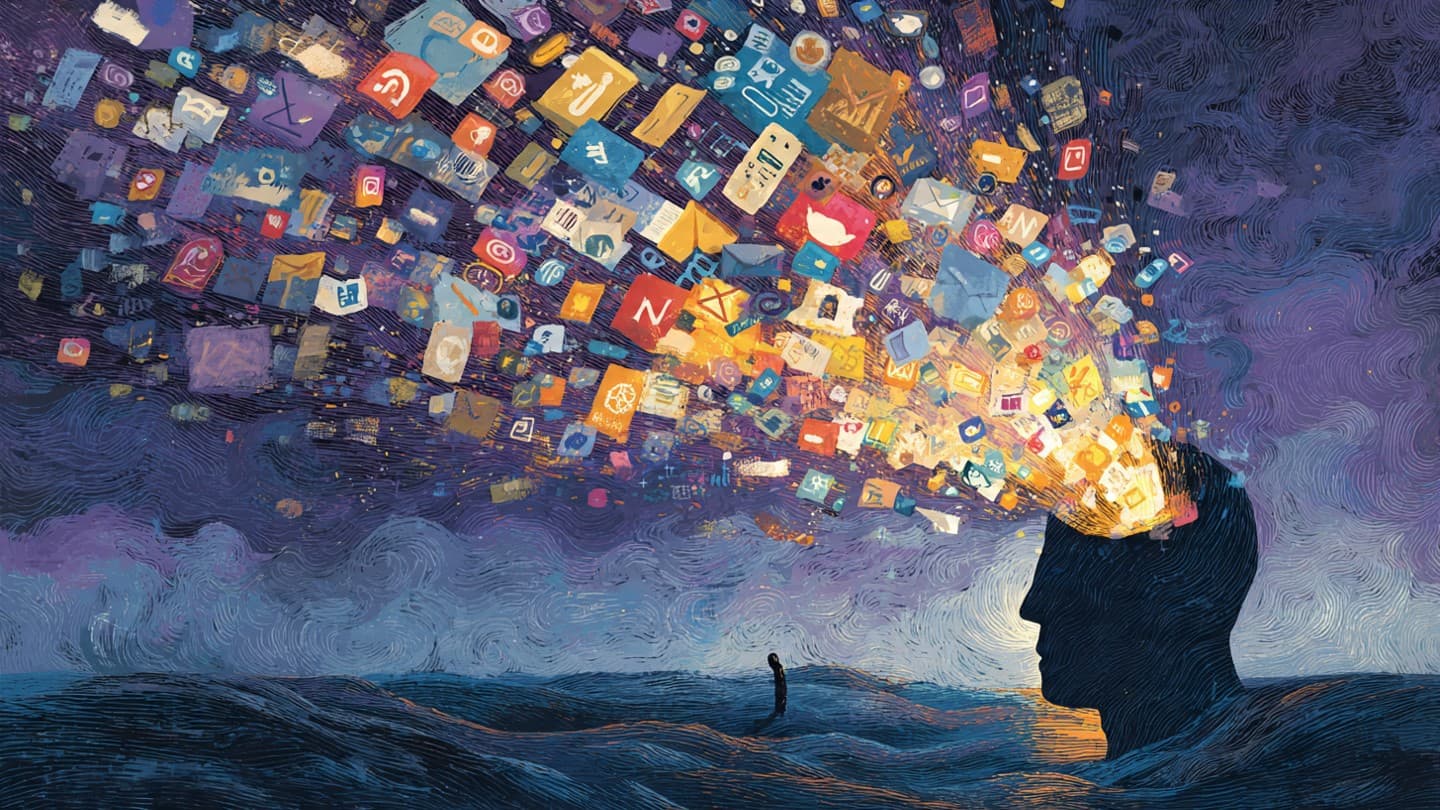
The biggest misconception of the modern era is that more information makes you smarter, more productive, or more successful. The opposite is true. Just like the body stores any calorie it can't burn as fat, the mind stockpiles every piece of information it consumes but doesn't actually process.
We call this information obesity. The cure isn't reading more — it's filtering better.
Consuming Information Isn't Producing Anything
You scroll past thousands of tweets, dozens of articles, and countless videos every day. Every piece of content you Hippo with a "I'll look at this later" or leave abandoned in a browser tab hangs in your head as an unfinished task.
The data is unambiguous. Dr. Gloria Mark's groundbreaking research at UC Irvine found that the average attention span on a screen task dropped from 2.5 minutes in 2004 to 47 seconds by 2021. McKinsey's 2025 report estimates that knowledge workers lose 2.1 hours per day — about 26% of their workday — to attention fragmentation.
Your brain isn't a library, it's a laboratory. When you stuff it with raw material, you lose the room you need to actually make something new. Mental load is the result: so much to remember, no room left to think.
Use Hippo as a Filter, Not a Vault
When we designed Hippo, we weren't trying to build a giant digital graveyard for everything you've ever seen. The opposite: a filter mechanism that lets your head go quiet.
So how do you use Hippo as part of a healthy "information diet"?
- Externalize and forget: When something catches your eye, don't try to hold it in your head. Hippo it and close the loop. Let your mind stay on the actual task in front of you.
- Selective recall: You don't have to read everything. Use Hippo's summaries as a preview. If a piece of information doesn't add value right now, let it sit. Hippo remembers for you, and you only pull it back when you ask.
- Make space to create: The emptier your head, the more creative it gets. When Hippo carries the memory load, your brain returns to its real job — making connections.
When Hippo Isn't the Right Tool
If your goal is to collect every piece of information in the world and file each one in a deeply nested folder, Hippo isn't where you should be. We care more about how accessible and usable information is than about how much of it you stockpile.
If your inner voice says "I have to organize everything with perfect precision", heavier tools like Notion or Evernote fit better. Hippo is for the "get it out of my head fast, find it fast when I need it" mindset. Same goes if your day is desktop-only and you barely touch your phone — a WhatsApp-based flow isn't your habitat.
3 Simple Rules to Start an Information Diet
- Don't consume mornings — create them: Spend the first two hours of your day on your own thoughts, not anyone else's writing.
- Don't open every link: Instead of clicking every interesting headline, Hippo them all and at end of day only return to the ones you actually still care about. The cost of saving links you never read is real.
- Weekly cleanup: Once a week, open your Hippo Dashboard and delete anything you no longer want. Keep your digital space as clean as your home.
The Real Currency Is Attention
In 2026, attention is the scarcest resource on the table. The way to protect it isn't saving more — it's saving less and focusing harder on what matters. Stop treating your brain like a vault. Process the information, hand the rest to Hippo.
The systemic answer to information obesity is a second brain. Our 7-day setup guide is here.
Less hoarding, more attention. Hippo handles the rest.
About the author
Murat Esmer
Growth Architect, HippoGrowth Architect at Hippo. Writes about second-brain workflows, AI-native productivity, and how to stop fighting your own tools.
Frequently Asked Questions
What is information obesity?
The state of consuming more information than your brain can process, leaving the rest stored as cognitive weight. Just like the body turns excess calories into fat, your mind stockpiles anything it took in but never digested. The fix isn't more reading, it's better filtering.
How do I use Hippo as a filter instead of a vault?
When something catches your eye, Hippo it and close that loop in your head. Hippo summarizes it. You only return to it when you actually need it, asking in plain language. You don't have to read everything: glance at the summary, and if it doesn't earn your attention right now, let it sit. The point is to keep your head clear, not to build a library.
Is the attention span really collapsing?
Yes. Dr. Gloria Mark's research at UC Irvine found the average attention span on a screen task dropped from 2.5 minutes in 2004 to 47 seconds by 2021. McKinsey's 2025 report estimates knowledge workers lose 2.1 hours per day — about 26% of their workday — to attention fragmentation.
When should I not use Hippo?
If your goal is to file everything in deeply nested folders and 'building a collection' is the point, heavier tools like Notion or Evernote fit you better. Hippo is for people who want to get information out of their head fast and find it fast when they need it.
Keep reading
Digital Minimalism: 5 Apps to Delete Today
Digital minimalism starts on your phone. Discover 5 app types to delete today and replace with one WhatsApp second brain, so your mind can finally breathe.
The 8 Best Second Brain Apps in 2026 (An Honest Comparison)
Picking a second brain app got hard in 2026: Notion AI, NotebookLM, Obsidian, mymind, Mem, Readwise, Tana, and Hippo. We compare all eight on the same 4 criteria, with prices, honestly.
Where Was That Warranty? The Easy Way to Store Documents You Need Twice a Year
The repair tech asks for the warranty card and you're lost in a gallery of thousands of photos. Hippo stores receipts and warranties over WhatsApp and brings them back with one question. 3 small steps to start today.